
24 July 2025
Cannabis and Interstate Commerce Challenges
As the legal cannabis industry continues to grow in the United States, one major obstacle remains: interstate commerce. Although cannabis is legal for medical and/or recreational use in many states, the federal government still classifies it as a Schedule I controlled substance, making it illegal to transport cannabis across state lines—even between two legal markets.
This disconnect creates a highly fragmented market, inflates operational costs, and prevents businesses from scaling efficiently. In this article, we’ll explore the legal, economic, and logistical barriers of interstate cannabis commerce, as well as what the future may hold for national cannabis trade.

Current Legal Landscape
Cannabis legalization in the U.S. operates under a dual system:
- States can legalize cannabis for medical or adult-use purposes.
- Federal law still prohibits cannabis under the Controlled Substances Act (CSA).
Because federal law supersedes state law in matters of interstate commerce, this means:
- Cannabis cannot legally cross state lines, even between two legal states (e.g., Oregon to California).
- Every state must create a self-contained cannabis supply chain, from cultivation to retail.
🛑 Exception:
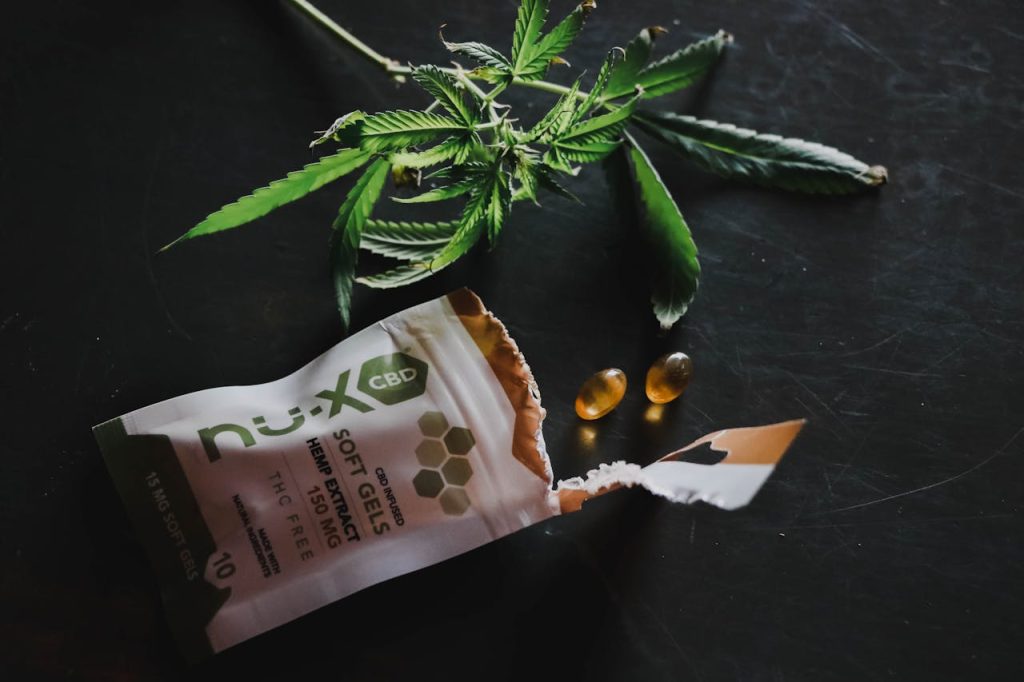
- Hemp-derived CBD products, legalized under the 2018 Farm Bill, can cross state lines—but only if they contain less than 0.3% THC and comply with both federal and state regulations.
The Impact on Cannabis Businesses
The ban on interstate cannabis trade forces businesses to replicate infrastructure in every state where they operate. This has serious implications:
💸 Financial Inefficiency
- Companies must build separate cultivation, processing, and distribution facilities in each state.
- Increases capital expenditure, regulatory costs, and compliance burdens.
📦 Supply Chain Challenges
- States with limited agricultural capacity must still produce cannabis locally, often at higher costs.
- Lack of access to lower-cost production states like Oregon or California limits product affordability.
🚧 Growth Restrictions
- Brands can’t centralize production and scale across the country.
- Reduces competitiveness, limits innovation, and discourages investment in national logistics.
🧱 The result is a fragmented patchwork industry instead of an integrated national market.
Legal and Regulatory Challenges
The root of the problem is the conflict between state legalization and federal prohibition.
⚖️ Key Legal Barriers:
- Federal Controlled Substances Act (CSA) prohibits transporting cannabis across state lines.
- Department of Transportation (DOT) and Drug Enforcement Administration (DEA) regulations restrict shipping and logistics.
- Cannabis businesses are often blocked from using federally regulated banking, insurance, and postal services.
🧾 Lack of Legal Protections
- There are no federal safe harbors for transporting cannabis across state lines.
- Even in legal states, a driver or business could face federal charges for trafficking if caught.
🛑 This creates uncertainty, discourages innovation, and keeps the industry in legal limbo.
Economic and Equity Implications
The inability to ship cannabis across state lines doesn’t just hurt businesses—it also has broad economic and social consequences.
📉 Market Inefficiency
- States are forced to produce cannabis regardless of climate, cost, or demand, driving up prices.
- Consumers pay more, and quality can suffer due to lack of specialization.
⚖️ Equity Setbacks
- Small and minority-owned businesses face higher barriers to entry, as they can’t expand easily across state lines.
- The current system favors well-capitalized multi-state operators (MSOs) that can afford duplication.
🏭 Local Overproduction
- States like Oregon and California often produce more cannabis than they can sell legally, resulting in:
- Price crashes
- Wasted product
- Increased temptation for diversion into illicit markets
- States like Oregon and California often produce more cannabis than they can sell legally, resulting in:
🌍 Without national trade, the cannabis economy can’t function efficiently or fairly.
Legal Challenges and Lawsuits
Several legal actions and policy efforts are pushing back against the ban on interstate commerce.
🧑⚖️ Dormant Commerce Clause Arguments
- Some lawsuits argue that blocking out-of-state businesses or shipments violates the U.S. Constitution’s Dormant Commerce Clause.
- Example: Northeast Patients Group v. Maine, where the court ruled Maine’s residency requirement unconstitutional.
🧾 State Legislation
- California SB 1326 (2022): Allows the governor to enter into interstate cannabis agreements with other legal states—contingent on federal reform.
- Similar efforts underway in Oregon (SB 582, 2019) and Washington (HB1159).
⚠️ So far, no interstate cannabis agreements have been implemented, but they lay the groundwork for future trade once federal laws change.
Potential Future Solutions
✅ Federal Legalization or Rescheduling
- If cannabis is removed from the Controlled Substances Act, the door opens for regulated interstate commerce.
- Proposals like the MORE Act, STATES Act, or SAFE Banking Act could pave the way for reform.
🤝 Interstate Compacts
- Legal states could enter interstate trade agreements, similar to alcohol or tobacco distribution networks.
- This would require federal cooperation or legal exemptions.
📋 Standardized Compliance
- To enable safe and fair trade, states would need to:
- Align testing standards
- Create labeling regulations
- Harmonize taxation and packaging laws
- To enable safe and fair trade, states would need to:
🚚 With a coordinated federal and state effort, cannabis could become a national—and eventually international—commodity.
Frequently Asked Questions (FAQs) About Cannabis and Interstate Commerce
❓ Why can’t cannabis cross state lines even if it’s legal in both states?
Because cannabis remains illegal at the federal level, it’s still classified as a Schedule I controlled substance under the U.S. Controlled Substances Act. This classification puts it in the same category as heroin and LSD—substances deemed to have no accepted medical use and a high potential for abuse.
As a result:
- Transporting cannabis across state lines is considered federal drug trafficking, regardless of whether both states have legalized cannabis.
- Even for companies operating legally within their own states, interstate transportation is a federal offense that could trigger DEA involvement or other criminal penalties.
This legal contradiction forces cannabis businesses to operate entirely within state boundaries, building separate supply chains in each state—leading to inefficiency, higher costs, and reduced access for consumers.
❓ Are any states working on interstate cannabis trade agreements?
Yes—several states are actively laying the groundwork for future interstate cannabis commerce. Most notably:
✅ California – SB 1326 (Signed into law in 2022):
- Allows the governor to enter into interstate cannabis agreements with other legal states.
- Trade can only begin once federal law permits it or the Department of Justice issues guidance allowing such agreements.
✅ Oregon – SB 582 (2019):
- Authorizes interstate transfers of cannabis products to and from other legal states under similar federal conditions.
✅ Washington State – HB 1159 (Introduced):
- Proposed legislation mirrors efforts by California and Oregon but is still under consideration.
These laws don’t yet allow cannabis to cross borders—but they’re preparing for federal legalization or reform. If and when it happens, these states could quickly activate regional cannabis trade routes on the West Coast and beyond.
❓ How does federal prohibition impact shipping and logistics?
Because cannabis is federally illegal:
- Businesses cannot use the U.S. Postal Service (USPS) to ship cannabis products.
- Most major private carriers—FedEx, UPS, DHL—refuse to handle cannabis shipments, even if they’re legal at the state level.
- Cannabis delivery must rely on in-state, licensed couriers who meet specific compliance, tracking, and security requirements.
🛻 What This Means for the Industry:
- No centralized distribution hubs—each state needs its own full supply chain (cultivation, processing, testing, warehousing, delivery).
- Higher transportation costs, especially in states with geographic or logistical challenges.
- Increased risk of product delays, spoilage, or inventory shortages, especially for medical patients who rely on timely access.
📦 Until federal law changes, cannabis logistics will remain localized, costly, and inefficient, preventing the industry from functioning like a true national market.
❓ Can CBD products be shipped between states?
Yes—but with important caveats.
Under the 2018 Farm Bill, hemp-derived CBD products that contain less than 0.3% THC are federally legal and can be shipped across state lines.
However, it’s not that simple:
- State laws vary—some states ban or strictly regulate CBD in food, drinks, cosmetics, or supplements.
- Labeling, testing, and THC limits must comply with both the origin and destination state’s laws.
- The FDA has not formally approved CBD for dietary supplements or food additives, which creates legal uncertainty in retail and e-commerce.
✅ Key Best Practices:
- Use lab-tested, THC-compliant products.
- Work with CBD-friendly states and carriers.
- Clearly label and document contents for compliance and customs.
🧠 Even though CBD is more freely traded than THC products, it still operates in a legal gray area that requires caution.
❓ What would happen to small local growers if interstate trade is allowed?
The legalization of interstate cannabis commerce could significantly change the market landscape—and small growers could be both at risk and in a position to thrive, depending on how policy is implemented.
⚠️ Potential Risks:
- Increased competition from large-scale producers in low-cost states (e.g., California, Oregon, Colombia).
- Price compression could reduce margins for small or indoor cultivators in high-cost states.
- Out-of-state brands could dominate shelf space, leaving local players struggling to compete.
🌿 Potential Opportunities:
- Regional specialization: Just like wine, cannabis could develop “terroirs” (e.g., Humboldt County as the “Napa Valley of Weed”).
- Craft cannabis: High-quality, small-batch products may find new audiences nationwide.
- New markets: Local growers could expand into states with less favorable growing climates or limited supply.
💡 Equity Considerations:
To ensure a fair transition, regulators could:
- Reserve portions of shelf space for social equity brands.
- Offer grants, training, or licensing advantages to small producers.
- Promote appellation systems that recognize regional cultivation styles and practices.
📈 With smart regulation and supportive policy, interstate commerce could actually open the door for small growers to reach national consumers—not just be pushed out by corporate competition.
Conclusion
The current prohibition on interstate cannabis commerce is one of the biggest roadblocks to a mature, efficient, and equitable cannabis industry in the U.S. It restricts growth, drives up prices, and favors corporations with deep pockets.
While legal reform is slow, the pressure is building. Lawsuits, state compacts, and congressional proposals all point toward an eventual shift. Until then, businesses and consumers alike will continue to feel the consequences of a disjointed legal framework.
Unlocking interstate commerce could be the tipping point that turns U.S. cannabis into a truly national—and global—industry.